
About Shinetsu Highlands
The Shinetsu Highlands stretch across a vast area blessed with magnificent nature, along the border between Niigata and Nagano Prefectures.
The five mountains scattered across this region are collectively known as the Shinetsu (Hokushin) Five Mountains, and have been deeply connected to the lives of the people living at their base since ancient times, revered as sacred peaks.
The four-season landscapes that adorn each distinctively beautiful mountain silhouette gently embrace the long passage of time, instilling a profound sense of tranquility in those who gaze upon them.
Highland areas such as Myoko Kogen, Sasagamine Kogen, Madarao Kogen, Kurohime Kogen, Togakushi Kogen, Iizuna Kogen, and Iizuna-Higashi Kogen spread across the mountain foothills. Together with Lake Nojiri, situated near the center, they create magnificent natural landscapes and offer us diverse pleasures including sports, historical walks, and hot springs.
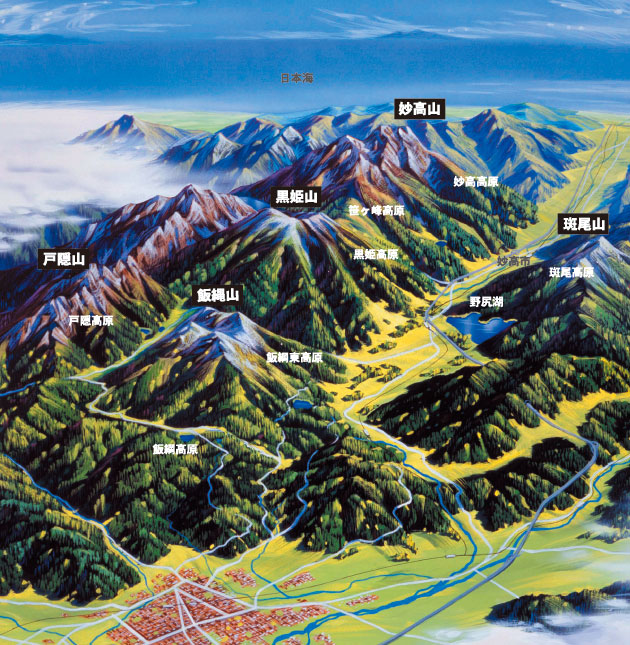
The Five Mountains
The five independent peaks along the Niigata-Nagano border are collectively called the Shinetsu Five Mountains (also known as Hokushin Five Mountains). Viewed from the east, they line up from right to left: Mt. Madarao, Mt. Myoko, Mt. Kurohime, Mt. Togakushi, and Mt. Iizuna, forming a beautiful mountain range through the seasons, connected by numerous trails.
Mt. Madarao 1,382m
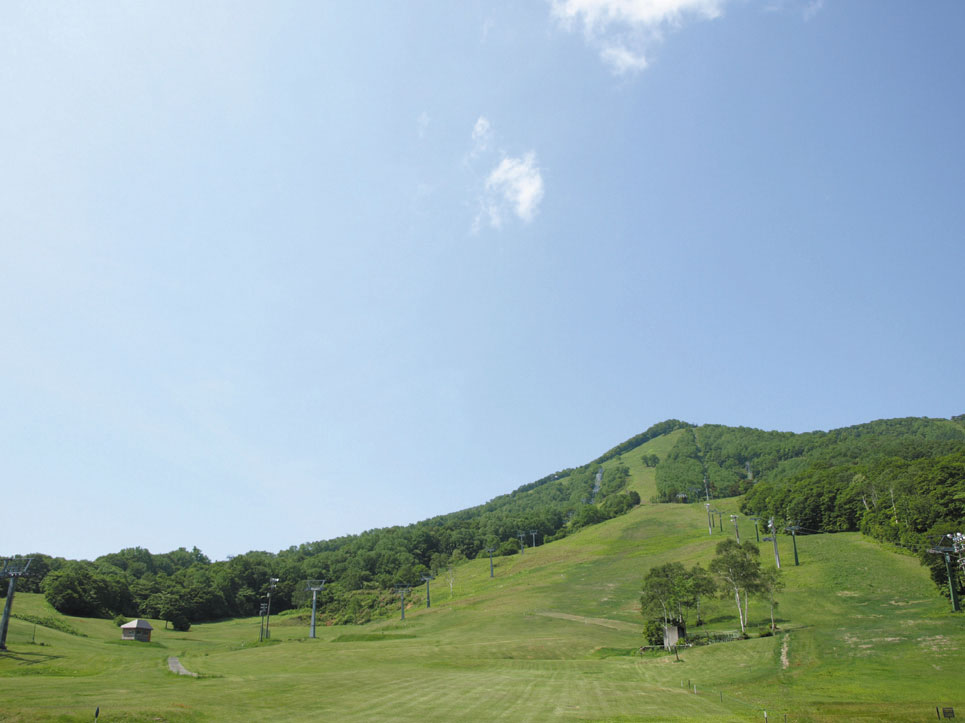
Mt. Madarao stands uniquely apart to the east among the five peaks.
Though the lowest in elevation, its ridges extend in complex patterns in all directions from the summit, giving it a distinguished presence.
Madarao Kogen at the base, with its gently sloping foothills, is a sports resort offering various activities, with over 50km of well-maintained trekking trails throughout the highland.
Lake Nojiri at its western base is said to have been formed by an eruption of Mt. Madarao.
Mt. Myoko 2,454m
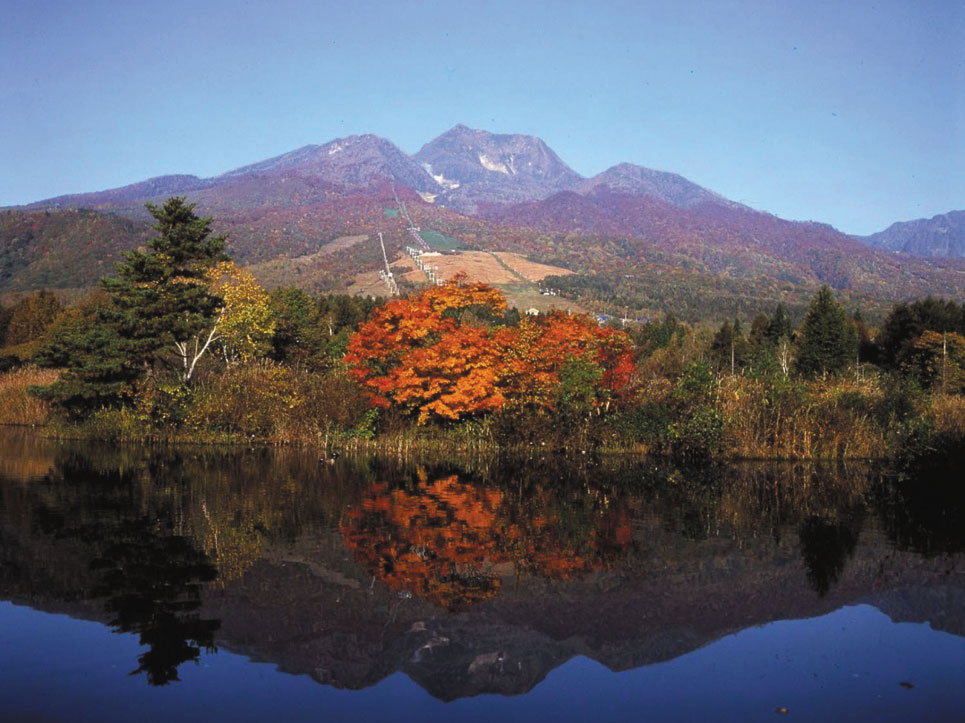
A classic compound volcano surrounded by outer rim mountains over 2,000m. Also known as “Sumeru” (the center of the world in Buddhism), it is selected as one of Japan’s 100 Famous Mountains along with nearby Mt. Hiuchi (2,462m).
The vast highland area at its base features seven therapeutic hot springs including Akakura, Shin-Akakura, Ikenotaira, Myoko, Suginosawa, Seki, and Tsubame, and is renowned as one of Japan’s premier ski resort areas.
Mt. Kurohime 2,053m
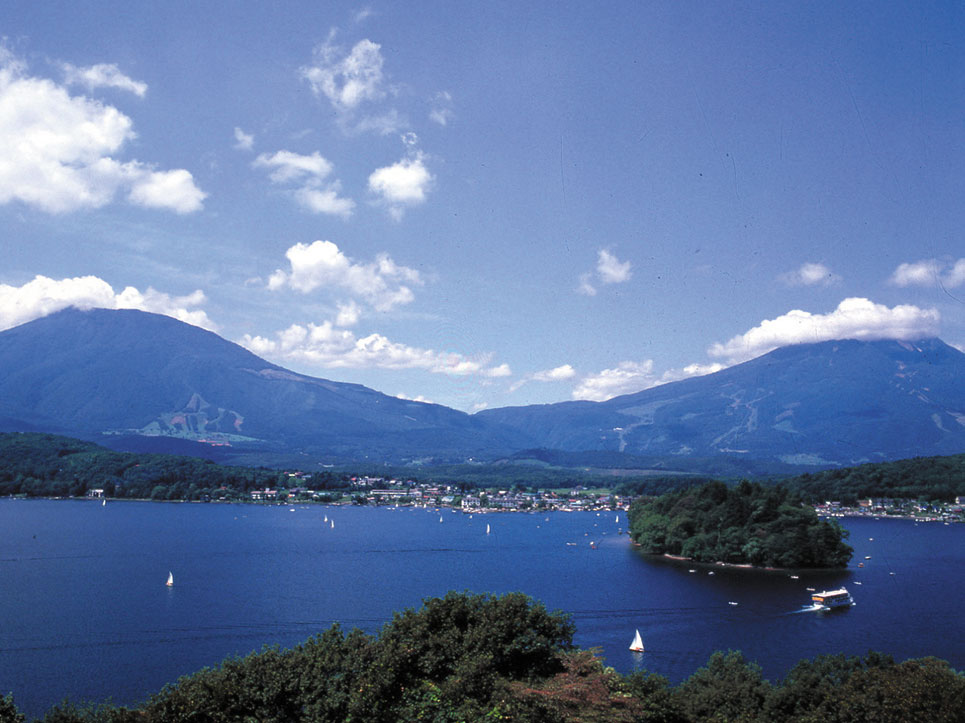
Also called “Shinano Fuji,” Mt. Kurohime is characterized by its gentle, feminine mountain profile.
The mountain is named after a tragic legend of Princess Kurohime. From summer to autumn, over one million cosmos flowers bloom at Kurohime Kogen at the eastern base, captivating many visitors.
Lake Nojiri, also famous as the excavation site of Naumann elephant fossils, has been a renowned international summer retreat since the Taisho era, bustling with lake sports in summer.
Mt. Togakushi 1,904m
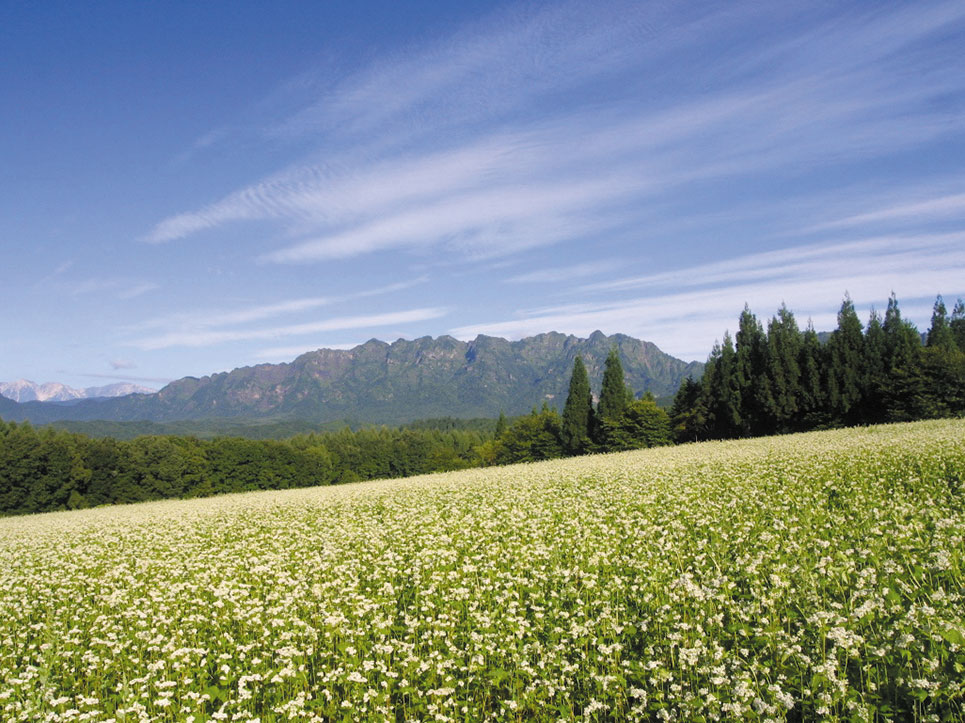
The main peak of the Togakushi mountain range, with dramatic cliff walls stretching like a folding screen when viewed from the east.
According to Japanese mythology, when Amaterasu (the sun goddess) hid in a cave, Tajikarao forced it open and the rock door flew to this spot, creating the mountain.
Long known as one of Japan’s foremost Shugendo (mountain asceticism) training grounds, the magnificent cedar-lined path leading to Togakushi Shrine’s inner sanctuary speaks to its deep history.
Near Togakushi Shrine’s middle sanctuary, famous soba noodle restaurants line the streets, and the area is also renowned for its bamboo craftswork.
Mt. Iizuna 1,917m
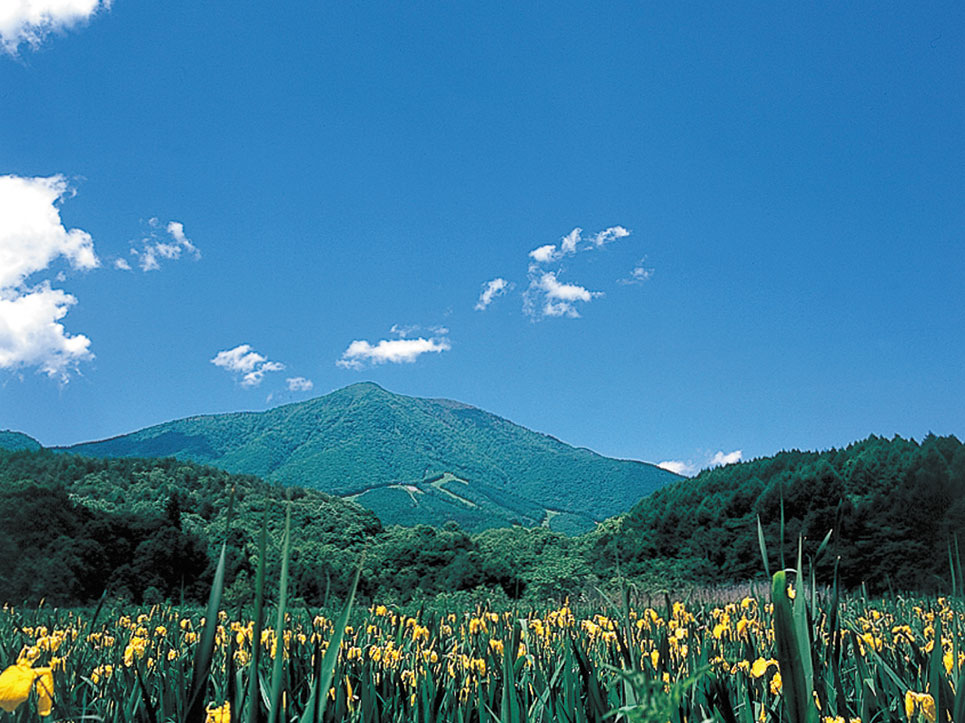
Though appearing as a gentle independent peak, Mt. Iizuna is actually a large mountain complex including the main peak, Mt. Reisennji, and Mt. Menoo. It has been a sacred mountain worship site since ancient times and is also known as a training ground for ninjutsu and swordsmanship.
Iizuna Shrine sits near the summit, and many small shrines remain along the hiking trails. Lakes dot both Iizuna Kogen to the south and Iizuna-Higashi Kogen to the east, with well-equipped outdoor facilities including campgrounds.